The Golden Era of the Honda CRX: From Forgotten Hatchback to Tuner Icon
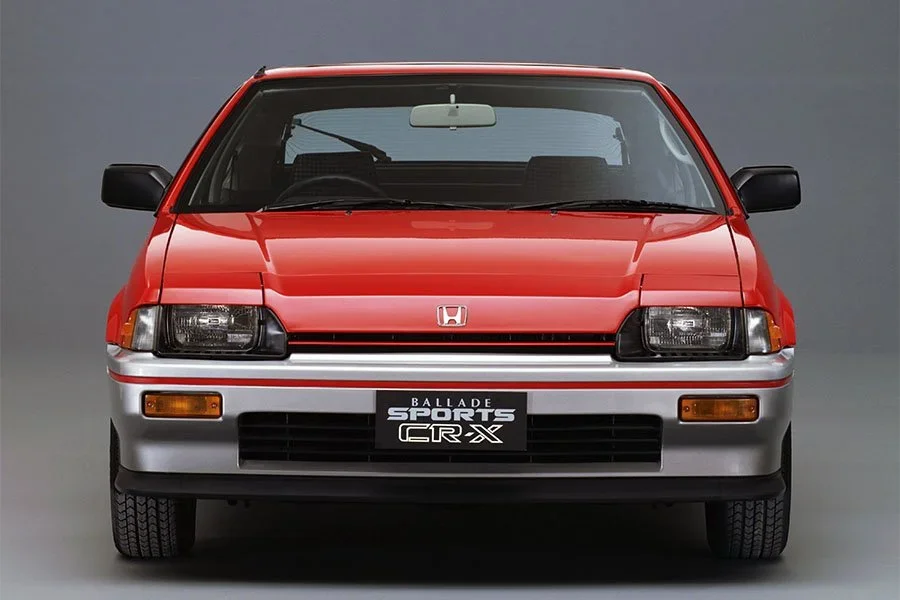
There's a reason we're pouring hours into a 1987 first-gen CRX Si instead of grabbing something easier. The CRX isn't just an old Honda. It's one of the most important small cars of the last 40 years, and most people don't realize it until they try to find parts for one.
Small, Light, and Built for the Street
Honda unveiled the CRX in June 1983 as a two-seat sport hatch riding on the Civic platform, sold in Japan as the Ballade Sports CR-X before it made its way to the States. From the jump, the formula was simple: strip weight, keep the engine light and responsive, and let the chassis do the talking instead of chasing raw horsepower. Where other automakers were racing to stuff bigger engines under the hood, Honda bet on balance and feel — and it worked.
The earliest first-gen cars were carbureted, and fuel injection didn't show up until 1985 with the arrival of the Si trim — which is exactly the car we're building right now. The Si instantly became the performance benchmark of the lineup. A featherweight curb weight paired with a rev-happy four-cylinder made the CRX quicker than a same-era Volkswagen GTI, for less money. That power-to-weight formula is also exactly why the CRX found a second life in the drag racing and autocross scene — light cars with easy-to-swap engine bays are gold when you're trying to put power down without fighting mass.
The 86/87 Facelift, and Why Japan Got the Good Stuff
Honda gave the CRX a mid-cycle refresh for 1986: flush-mounted headlights replaced the earlier flip-up setup, a new front bumper added a full-width intake, the taillights went smoked, and the Si finally picked up wider 185/60R14 tires and a cleaned-up interior. 1987 carried that same look into the final year of the first generation before the second-gen car took over that September.
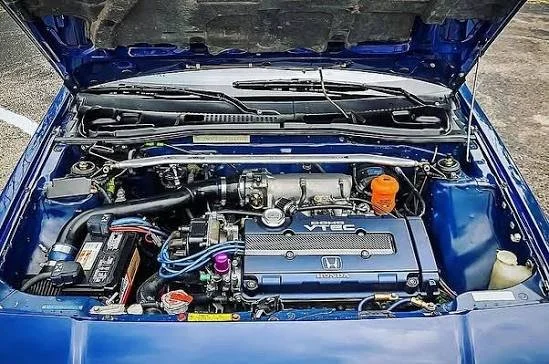
Here's where it gets interesting. The Japanese-market Si wasn't the same car we got in the States. JDM cars ran a different rear seat package than the US version (Honda dropped the folding rear seat here to free up more front seat travel), and under the hood, the JDM Si moved to a twin-cam engine years before American buyers ever got a dual overhead cam CRX — the DOHC engine that would eventually evolve into the legendary VTEC B-series Honda is famous for today. Meanwhile, the US Si was stuck with the single-cam D-series and PGM-FI making 91 horsepower. Same body, same badge, completely different car under the skin. Japan simply got the better version.
That's exactly why we're not doing a stock restoration on this one. We're retro-modding our 1987 Si into what Honda should have given the US market the whole time.
Bigger Than Its Own Era
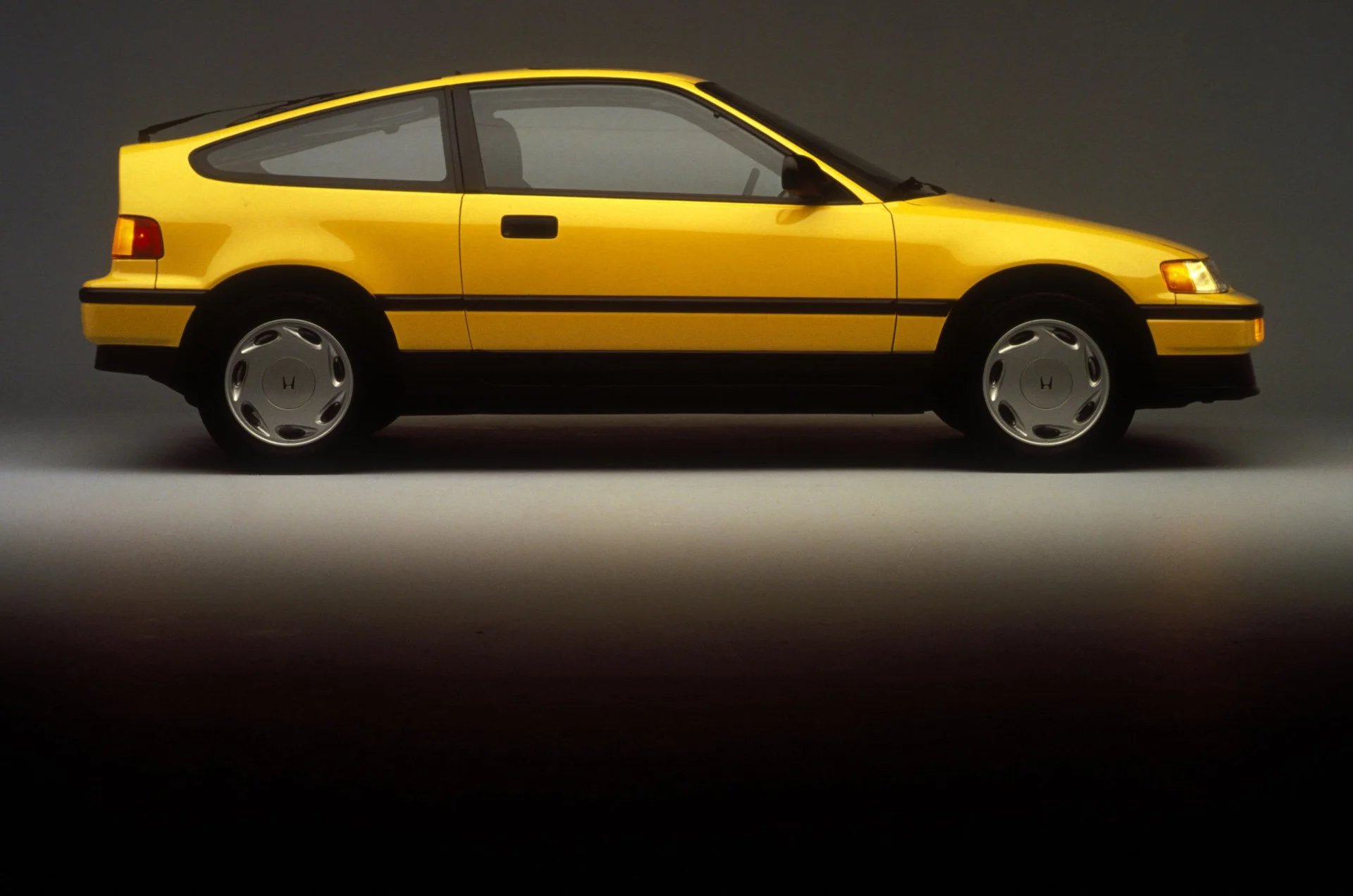
By 1988, the second-generation CRX was landing on "best cars" lists next to the Ferrari Testarossa and Porsche 911, and it went on to win Motor Trend's Import Car of the Year in 1990. Mugen even partnered with Honda in the mid-80s to build a race-prepped CRX for SCCA competition, cementing its motorsport credibility before the tuner scene as we know it even existed. This wasn't a car that became cool because Hollywood said so — the CRX was already earning respect on race tracks and in tuner garages years before "Fast and Furious" put import culture in front of a mainstream audience.
Left for Dead, Now Hard to Find
For a long stretch, that same lightweight, easy-to-swap nature that made the CRX a legend also made it disposable. Cheap, plentiful, and easy to modify, a lot of these cars got tracked, drag raced, swapped, and eventually wrecked or scrapped. Survivors — especially clean, unmolested first-gen Si cars like ours — are a lot rarer than people expect.
That scarcity shows up the second you go looking for parts. Simple things that used to be a dealer counter part number, like the rear quarter glass molding or windshield trim, aren't sitting on shelves anymore. It's common now to see small specialty companies reproducing moldings and trim pieces specifically because original stock dried up and demand from the restoration and tuner community never went away. When a niche parts company decides it's worth tooling up a mold just for CRX glass trim, that tells you everything about where this car sits in the market right now.
Why We're Doing This Build
This is exactly the car we're racing the clock on for Cruisin' the Coast. Not because it's the easiest project, but because the first-gen CRX Si earned its spot in tuner history the hard way — on the strip, in the SCCA, and in garages full of people who figured out that light and simple beats big and heavy. We're building ours to finally be the car Honda gave Japan and never gave us. Cars like this are only getting harder to find in good shape, and the parts hunt only gets tougher from here.
70 days on the clock. Follow the build.
We Buy It. We Fix It. We Live It.